How to Build an Visual Intelligence Pilot That Actually Succeeds
visual intelligence pilots fail when they are treated as demos instead of operational validation projects. This guide explains how to design a pilot that produces evidence, decisions and a realistic scale-up plan.
Executive summary
An visual intelligence pilot should answer one question: can this specific set of camera feeds support this specific operational workflow with enough reliability to justify production deployment? Many pilots fail because they are designed as technology demonstrations instead of validation projects.
Choose one operational use case
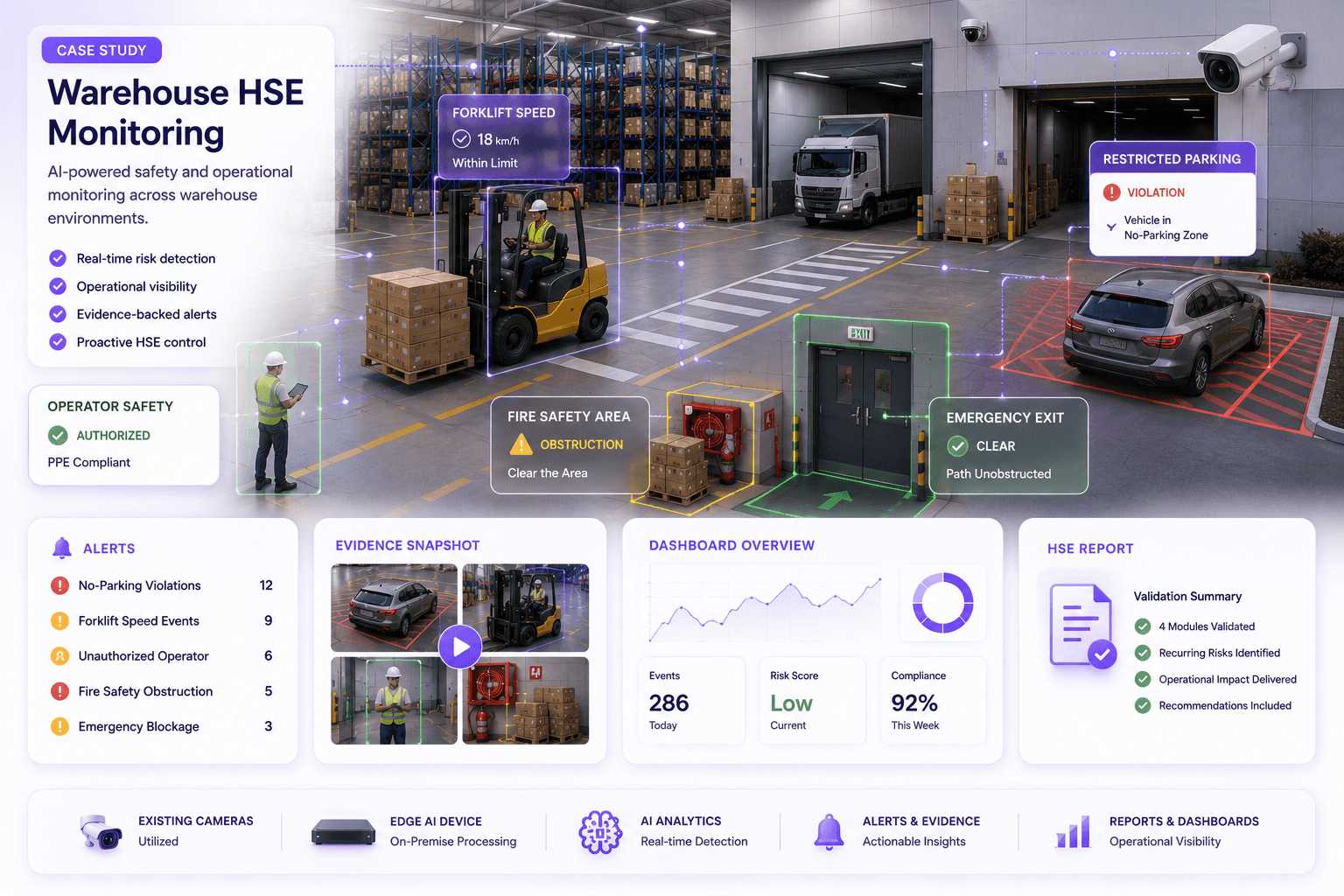
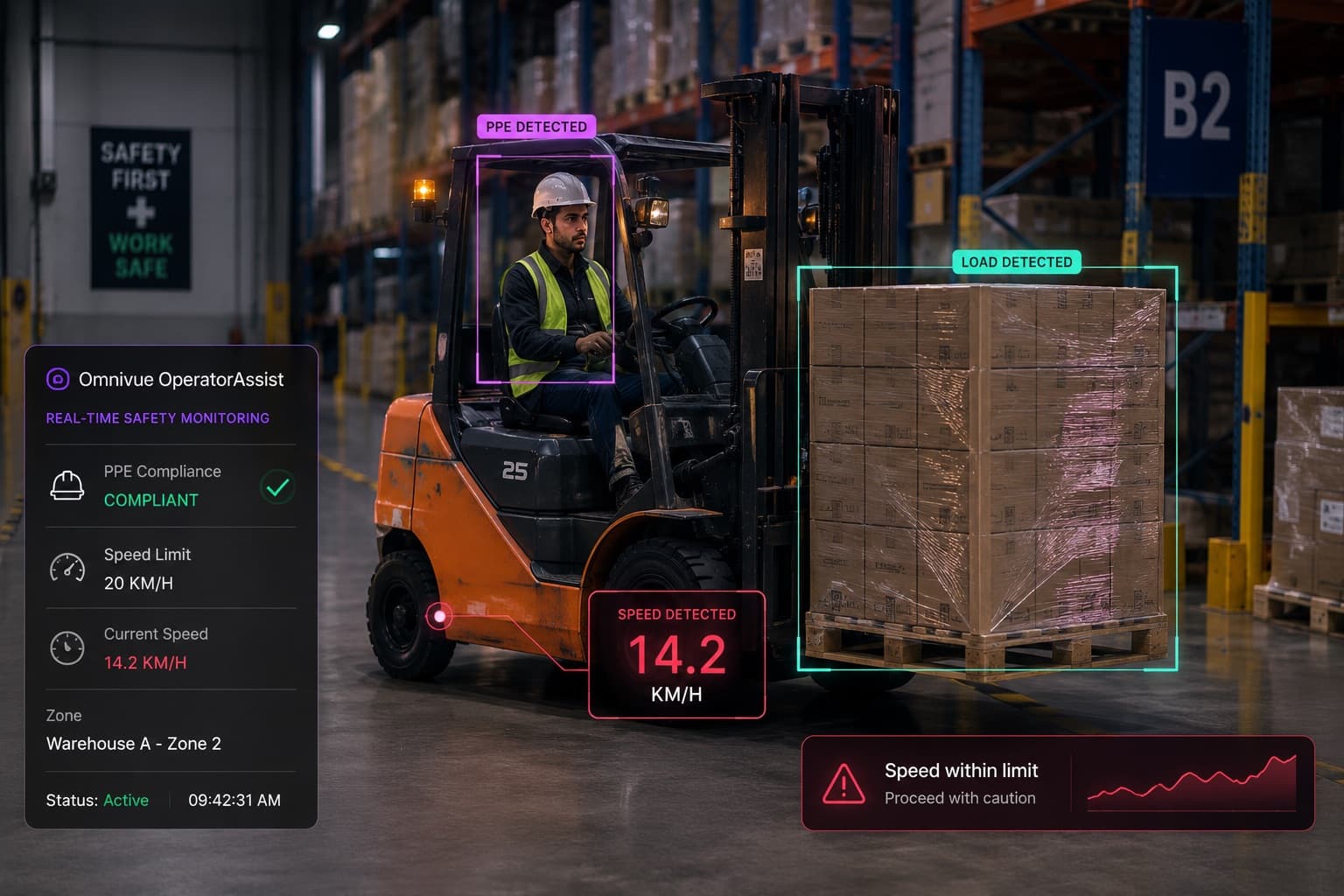
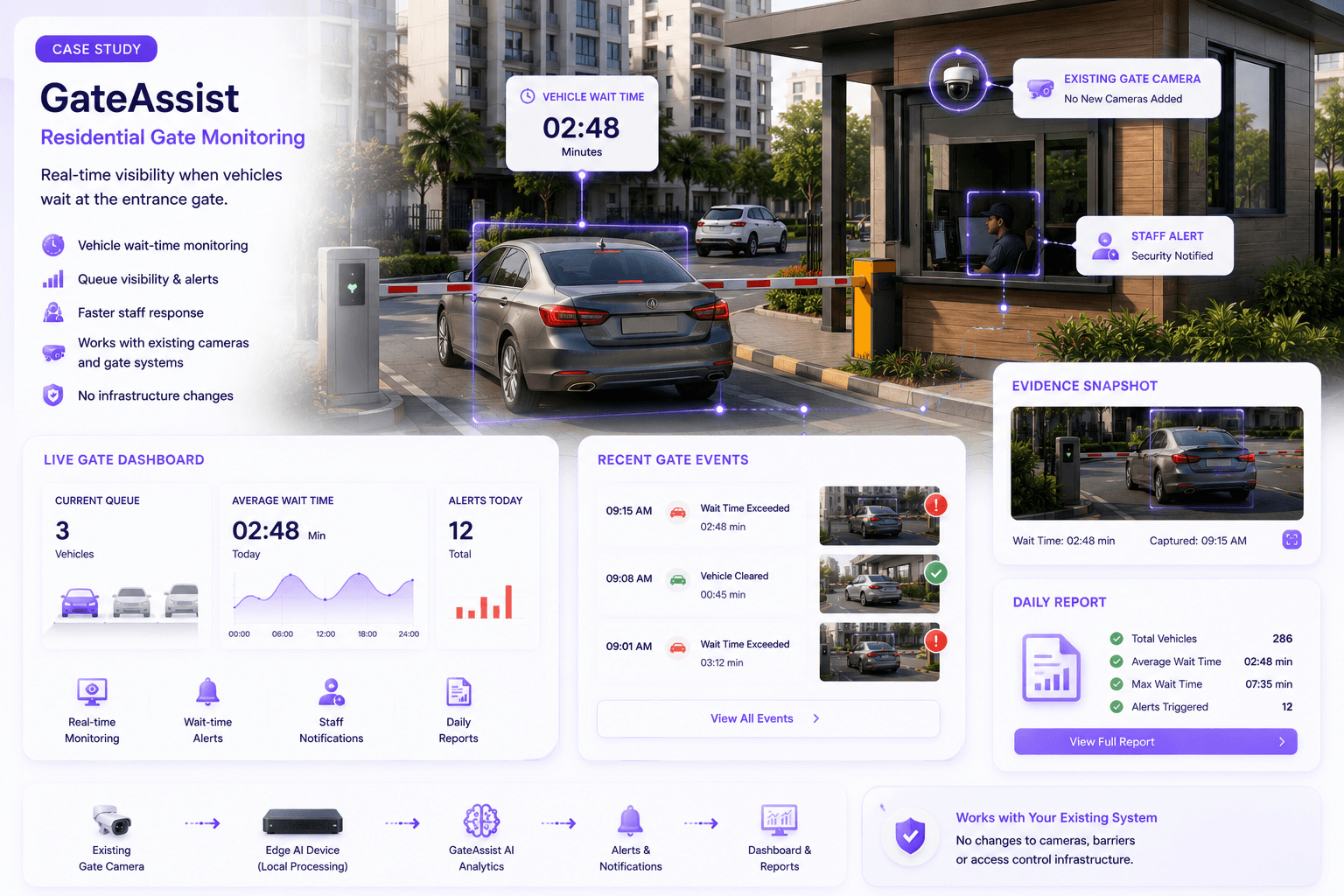
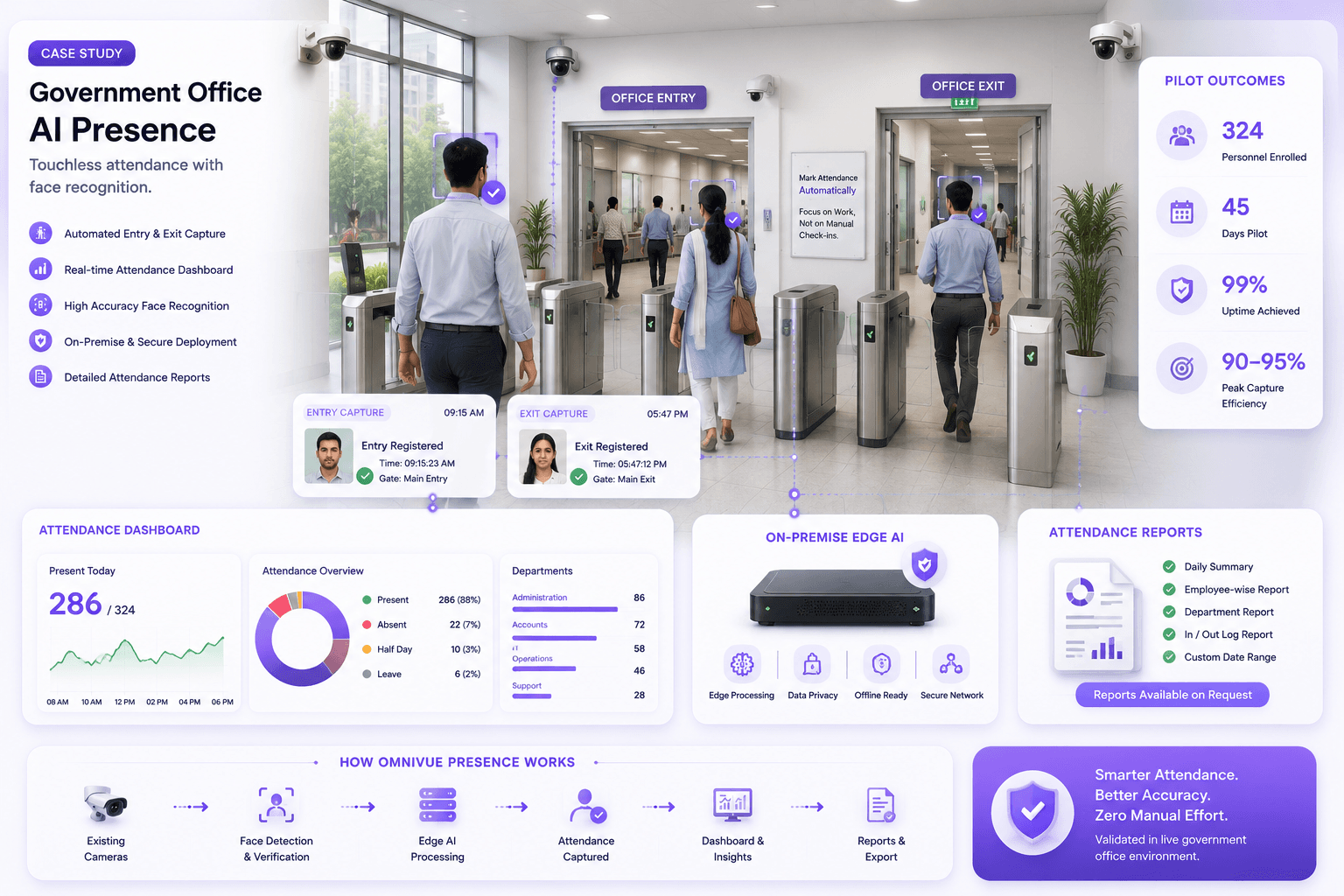
The strongest pilots begin with a narrow problem: visitor entry delay, PPE non-compliance, forklift proximity risk, queue build-up, unauthorized access, parking gate congestion or attendance capture at a defined location. Avoid piloting every module at once.
Related KVABI pages for this topic include Architecture, Case Studies and Partners.
Run a camera audit
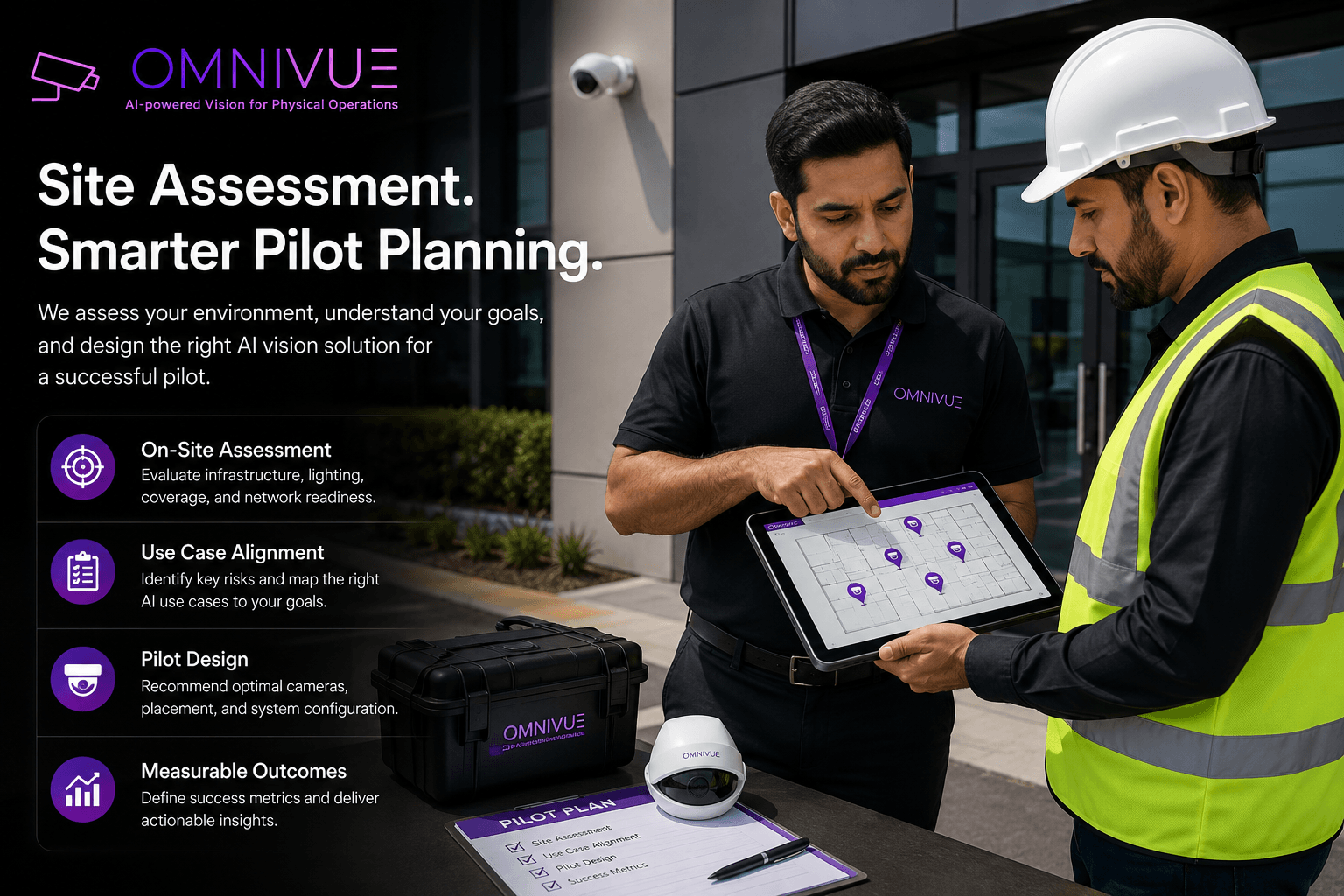
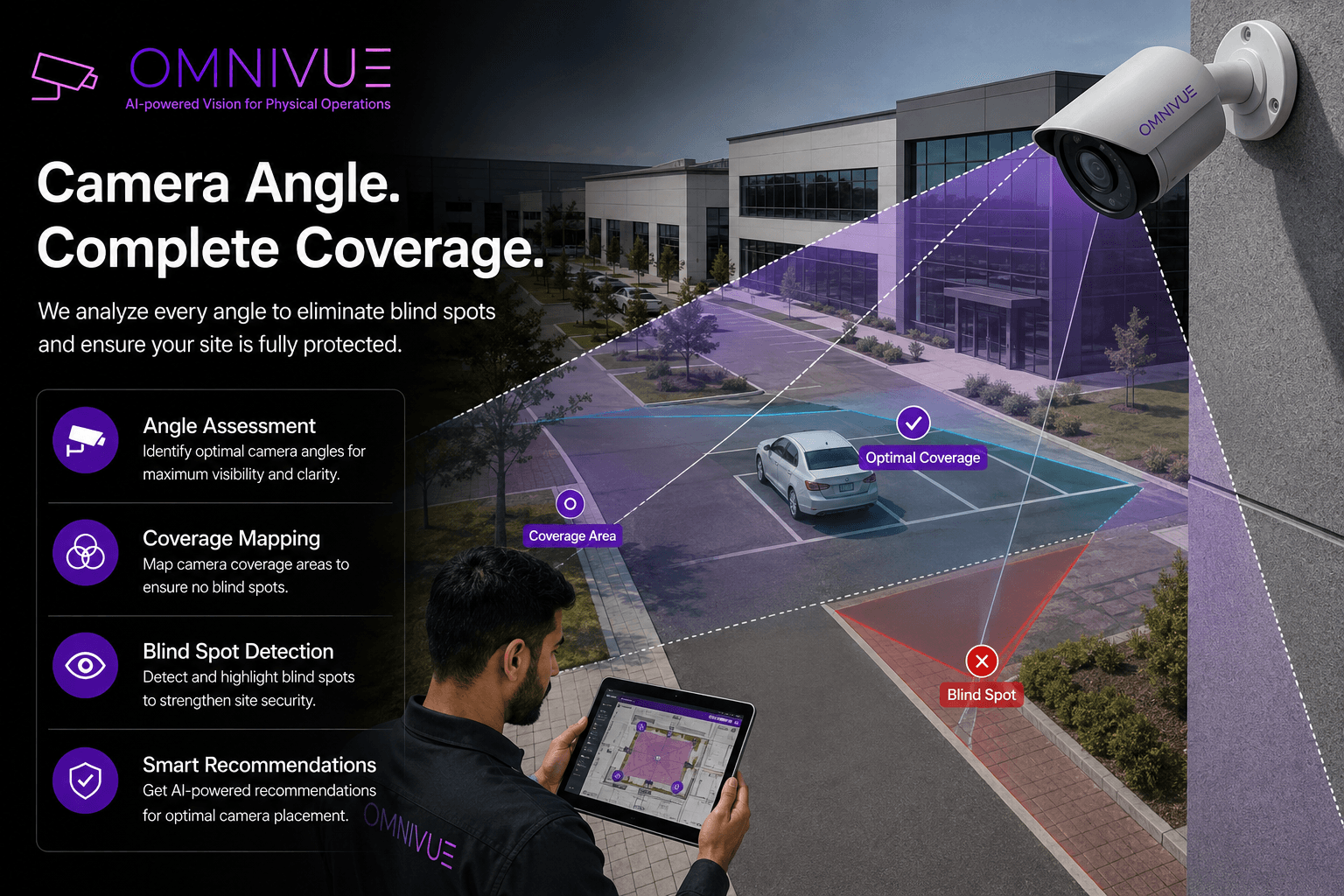
A camera audit should check stream access, resolution, frame rate, lighting, target size, field of view, occlusion and scene stability. It should also identify whether the camera captures the actual decision point. This protects both customer and vendor from unrealistic expectations.
Define events and evidence
The pilot should specify what counts as an event. Evidence requirements should also be clear: snapshot, clip, timestamp, camera, location, severity, reviewer notes and closure status. Vague expectations create disagreement at the end of the pilot.
| Decision area | What to check | Why it matters |
|---|---|---|
| Camera suitability | Angle, lighting, resolution and target size | Determines whether AI can see the operational event |
| Workflow ownership | Alert recipient, review process and closure | Prevents dashboards from becoming unused reports |
| Scale decision | Validated scenes, compute needs and support model | Turns a pilot into a controlled rollout |
Measure operational success
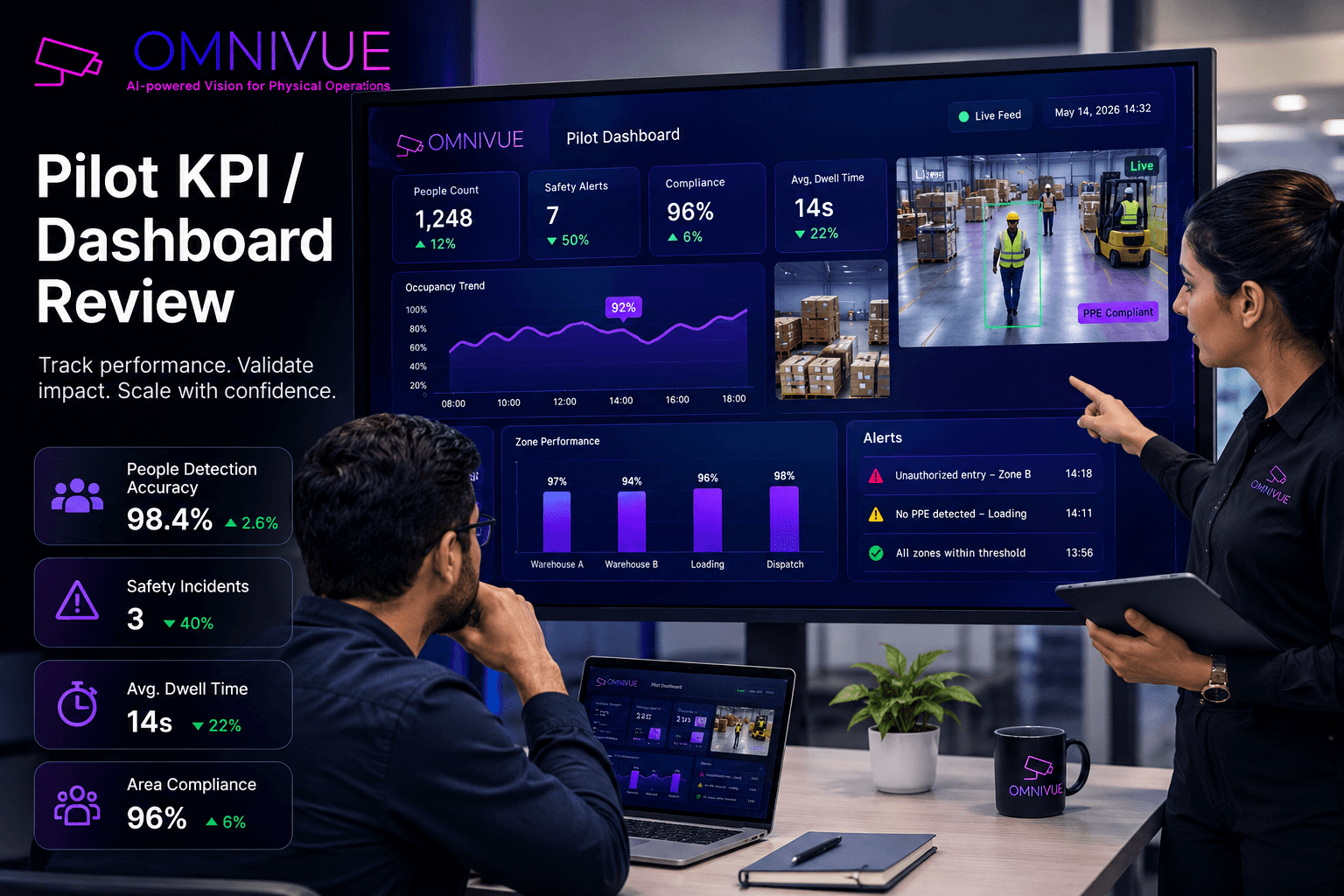
Useful pilot metrics include detection precision, false positive rate, missed event review, alert-to-action time, number of actionable events, recurring hotspots, user adoption and whether the workflow changed behavior. A pilot report should support a scale, adjust or stop decision.
Convert results into rollout
Scale-up should be based on validated camera types, proven workflows and clear site priorities. The plan should define licensing, compute requirements, support model, integration requirements, training, reporting cadence and owner responsibilities.
Pilot planning review
Plan an Visual Intelligence Pilot With Clear Success Criteria
KVABI helps organizations define pilot scope, camera selection, workflows, success metrics and scale-up decisions before production rollout.